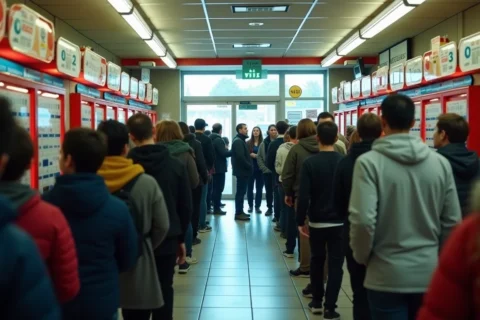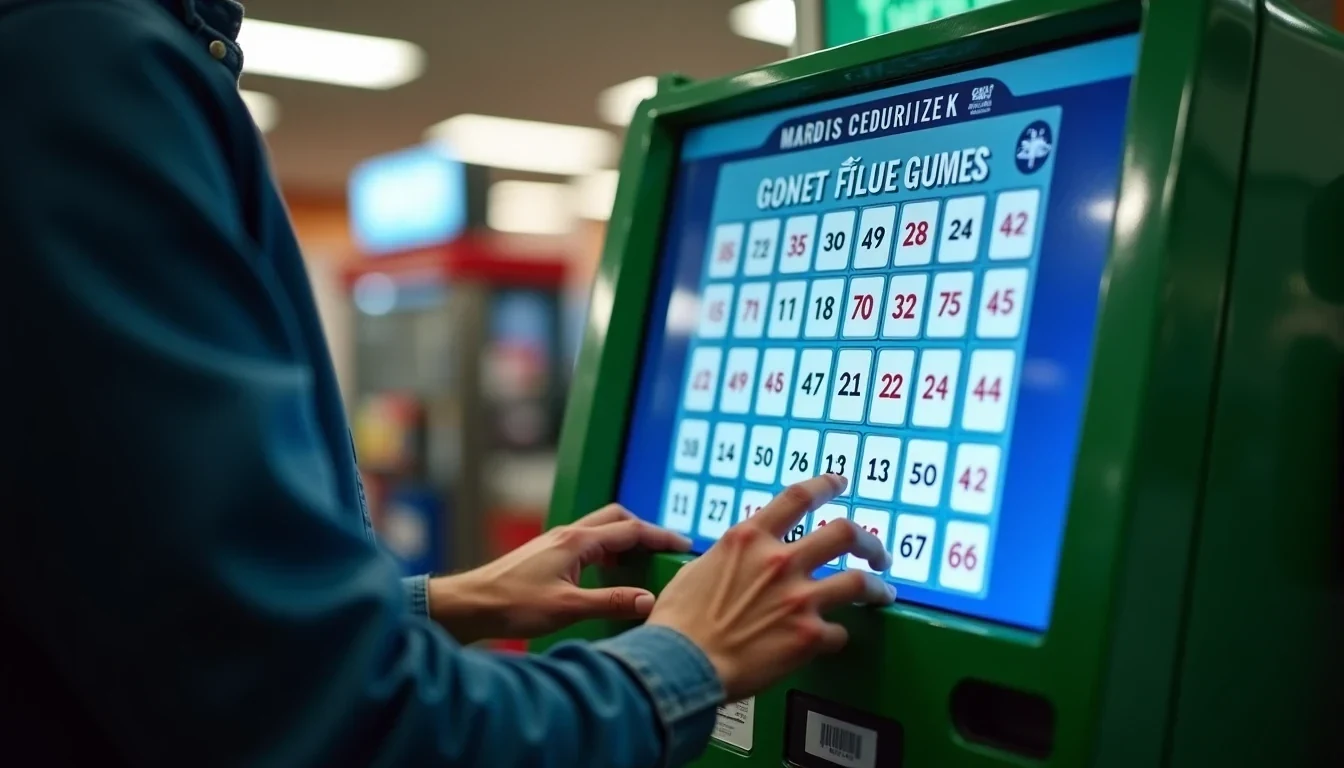
A woman in Illinois once stood at a lottery terminal, generating Quick Pick after Quick Pick. She rejected each one until a favored number finally surfaced. She went on to win, becoming known as the “Lucky Lady,” a story that seems to celebrate intuition over randomness. Her method changed nothing about her actual odds. The machine did not care that she waited. The balls did not remember her patience. She simply layered personal meaning onto a process that remains, at its core, indifferent to meaning entirely.
This tension between what we feel and what the mathematics allow sits at the heart of how most people play. The numbers we choose become tiny vessels for hope, memory, superstition. But that emotional investment carries a price few players consider until it is too late.
The Illusion of Control
Lottery draws do not distinguish between numbers selected by human hand and numbers spat from a certified random number generator. Each combination occupies the same infinitesimal point in probability space. In Powerball, 1-2-3-4-5 with Powerball 6 holds identical odds to any scrambled set of digits, roughly one in 292.2 million. The physical balls have no memory. The RNG holds no preference. Your anniversary date is not registered anywhere in the system.
The act of choosing transforms the experience. Birthdays, children’s ages, house numbers, digits pulled from dreams—these methods give players something the Quick Pick cannot: a narrative. The ticket becomes a physical object tied to lived experience, not merely a financial instrument. When the “Lucky Lady” reshuffled her Quick Picks, she was not improving her chances. She was making the random feel personal, wresting a sense of agency from a process designed to eliminate it.
This psychological need runs deep. Researchers have long documented how active selection creates stronger emotional attachment than passive receipt, even when outcomes are identical. The lottery understands this. It does not need to rig the game; players rig their own expectations, happily.
The Birthday Trap and Other Shared Delusions
The practical consequence of all this meaning-making arrives only after the impossible happens: you actually win. Popular number patterns do not make winning less likely. They make winning more crowded.
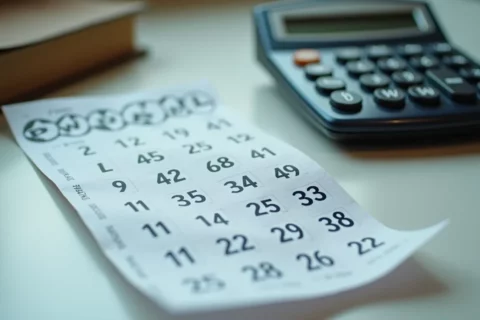
Consider the arithmetic. Numbers 1 through 31 dominate player selection because they map to calendar dates. A jackpot draw composed primarily of low numbers will produce more winners than one featuring numbers above 31. The prize pool splits equally. The fantasy of sole ownership dissolves into a group photograph and a smaller check.
History offers repeated instruction. In 1995, the UK National Lottery drew 3, 5, 7, 11, 23, 42, several low primes that players favor. One hundred thirty-three tickets matched. Each winner received £162,197, a respectable sum that nonetheless represented a shattered dream of generational wealth. Twelve years later, multiples of seven (7, 14, 21, 28, 35, 42) produced 110 winners at £160,000 each. The pattern was not subtle. The players who chose it were not unusual; they were legion.
Consecutive sequences, diagonal patterns on play slips, multiples of five or ten: these choices feel special to the individual but are statistically ordinary in their popularity. The 1-2-3-4-5-6 combination, often dismissed as too obvious to be chosen, would in fact split any jackpot catastrophically if drawn. Over 10,000 UK players once collected a lower-tier prize on that exact sequence, suggesting the jackpot scenario would have been a financial massacre dressed as celebration.
What the “Lucky Lady” Really Won
The Illinois winner’s story deserves closer reading. Her reshuffling ritual did not alter probability. It altered her relationship to the ticket. She received the same random product as any Quick Pick player, simply filtered through personal preference until her psychological conditions were met. The machine generated randomness; she supplied the narrative frame.
This is the lottery’s quiet genius. It sells randomness while allowing players to believe they have participated in something purposeful. The “Lucky Lady” is not an exception. She is every player who has ever crossed out a Quick Pick to manually enter a birthday instead, every player who has ever said “these numbers spoke to me.” They spoke because she listened. The numbers themselves were silent.
The financial risk of this approach remains invisible until victory. A $100 million jackpot divided by one winner is life-changing. Divided by one hundred, it becomes merely excellent. The difference lies not in the draw but in the choices thousands of strangers made independently, each believing their combination unique, each correct in their uniqueness but wrong in their solitude.
The Cold Comfort of Unpopular Numbers
No strategy improves lottery odds. The only variable players control is the potential payout conditional on winning. Selecting numbers above 31, avoiding consecutive sequences, rejecting obvious patterns, these choices do not make winning more probable. They make winning, should it occur, more valuable.
This is a bitter trade to offer. It asks players to surrender emotional connection for financial optimization in a game where emotional connection is often the entire point. The lottery ticket as love letter, as hope object, as ritual, these uses are real and valid. They simply exist in tension with the rational actor model that would maximize expected value.
Most players will not make the rational choice. The “Lucky Lady” did not. She wanted her number present, her story intact, her ticket hers. The mathematics yawned. She won anyway, her prize undiminished by sharing because her particular combination happened not to collide with mass preference. Others, equally devoted to their digits, have won collectively and walked away with fractions they never anticipated.
The lottery does not punish belief. It merely ignores it, then occasionally distributes its indifference across too many believers at once. The balls fall where they fall. The numbers we bring to them are our own.