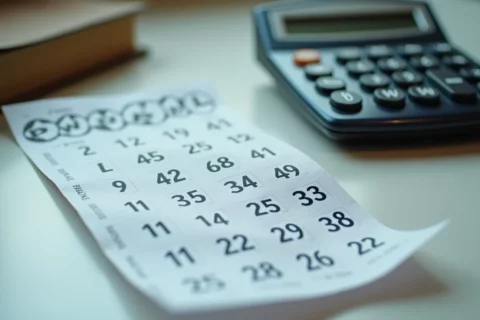
Someone in Austin, Texas, beat odds of roughly 1 in 11.7 million this past February. They matched all five white balls in a Powerball draw, turning a $2 impulse purchase at a Circle K into a $1 million second-tier prize. Six months later, that same piece of paper is still out there somewhere, quietly approaching its expiration date on 1 August. The jackpot was extraordinary, but the threat to it is almost insultingly ordinary.
Where Fortunes Go to Hide
The most remarkable thing about unclaimed lottery prizes is not their size but their hiding places. A million-dollar ticket does not demand a vault; it asks for a pocket, a cupholder, or that one kitchen drawer where batteries and takeout menus go to die.
Laundry piles rank among the most notorious offenders. Trousers and jacket pockets swallow tickets whole, sometimes destroying them in the wash before anyone thinks to check. Wallets and overstuffed purses create another blind spot, with winning slips vanishing among receipts and loyalty cards. Vehicle interiors are equally treacherous. A ticket tossed into a glove compartment or center console during a quick stop can sit undisturbed for months, buried beneath registration papers and parking stubs.
Digital players are not immune. Unopened apps and unread email notifications mean online purchases can slip through cracks just as easily as paper ones. Seasonal clothing poses its own delayed risk; a coat pocket checked in October might reveal a ticket bought the previous March, too late for a claim window that closed in September.
The Austin ticket could be anywhere in this landscape of domestic neglect. The odds of winning were astronomical. The odds of losing the ticket to a junk drawer were, for some players, far higher.
The Clock Runs Differently Everywhere
Lottery claim deadlines are a patchwork, and assuming uniformity is a costly mistake. The Texas ticket carries 180 days from its 2 February draw date, a standard that applies across the state for draw games. Cross a state line in the US and that window stretches or contracts. New York allows a full year for Mega Millions and Powerball claims. California holds firm at 180 days.
The variation widens dramatically across borders. EuroMillions, played across multiple European nations, illustrates the confusion. France demands claims within 60 days. Spain and Ireland each allow 90. The United Kingdom, playing the exact same game, grants 180 days. A ticket worth millions can expire three times faster depending on which side of the Channel it was purchased.
Canada tends toward generosity, with most provincial lotteries offering 365 days. Australia splits the difference by jurisdiction: New South Wales allows up to six years for smaller prizes but generally caps major wins at one year, while Tatts Group territories in Victoria and elsewhere typically allow twelve months. Italy’s SuperEnalotto enforces a strict 90-day deadline, one of the tighter windows among major global games.
| Jurisdiction | Typical Deadline | Notes |
|---|---|---|
| Texas, USA | 180 days | Applies to draw games including Powerball |
| New York, USA | 365 days | Among the longest US windows |
| France (EuroMillions) | 60 days | Same game, shorter fuse |
| UK (EuroMillions) | 180 days | Double France’s allowance for identical draws |
| Canada (provincial) | 365 days | Consistent across most provinces |
| Italy (SuperEnalotto) | 90 days | Relatively compressed timeline |
What Happens to the Money
Unclaimed prizes do not simply evaporate, though they may as well for the intended winner. Each jurisdiction channels forgotten fortunes according to its own priorities, turning private windfalls into public revenue streams.
Texas directs expired prize money into its General Revenue Fund, supporting state operations broadly. California and Florida both earmark unclaimed funds specifically for public education, a consolation prize of sorts for school systems. The UK’s National Lottery routes expired prizes and their accrued interest to a Distribution Fund backing arts, sport, heritage, and community projects. This mechanism has directed billions toward charitable causes since the lottery’s inception. New York sometimes returns funds to future prize pools, letting unclaimed money generate fresh excitement, or diverts it to educational aid. Canadian lotteries frequently recycle unclaimed prizes into bonus draws and special promotions, giving the money another shot at changing a player’s life.
The Austin ticket, if it remains hidden past 1 August, will join this flow of redirected wealth. The Circle K where it was sold has done its part. The state will do its part. The only missing actor is the person who actually won.
The Monthly Habit That Could Change Everything
The scale of unclaimed prizes globally is staggering enough to constitute its own category of lottery lore. A $77.1 million Powerball ticket purchased in Georgia in 2011 expired after 180 days, one of the largest such forfeitures in American history. In 2012, half of a £127.6 million EuroMillions jackpot, £63.8 million, went unclaimed in the UK after the winning ticket was bought somewhere near Stevenage and Hitchin. New York saw a $68 million Mega Millions ticket expire in 2003, purchased in Queens and never redeemed. Indiana, Florida, and Alberta have all recorded eight-figure unclaimed prizes in the past two decades.
These are not rounding errors. They are life-altering sums surrendered to laundry piles, misplaced wallets, and unchecked glove compartments.
The antidote is almost embarrassingly simple: a monthly unclaimed-prize check. Set a calendar reminder. Spend five minutes scanning your national or state lottery’s list of outstanding wins. Check the pockets of whatever you wore on draw day. Open the app you downloaded and forgot about. The habit costs nothing and carries asymmetric upside. Most months reveal nothing; one month changes everything.
The Austin $1 million ticket still has time, barely. Someone in central Texas is living within miles of a fortune they may not know they possess. They are not unique in this. They are simply the current face of an ancient lottery irony: the final obstacle to wealth is rarely the draw itself. It is the human capacity for distraction, the mundane triumph of the everyday over the extraordinary, the ticket that went through the wash or settled to the bottom of a bag and stayed there, quietly, while the deadline crept closer.