A lottery rollover is a peculiar kind of suspense machine. The jackpot swells, headlines multiply, and somewhere in the noise, millions of people win money that never makes the news. The $1.817 billion Powerball streak that stretched across 47 drawings in late 2023 became the longest jackpot drought in that game’s history. The final draw alone produced eight tickets worth $1 million each, 114 tickets at $50,000, and another 31 tickets that doubled to $100,000 through the Power Play multiplier. The top prize was the headline; the real action was everywhere else.
The Invisible Economy Beneath the Jackpot
Every rollover creates a secondary market of winners that operates in plain sight but draws almost no attention. The mathematics are straightforward and brutal: the odds of matching five white balls in Powerball stay fixed at roughly 1 in 11.6 million, but the number of tickets in play does not. A routine drawing might move 10 million tickets, but a record rollover can push that figure past 100 million. The probability per ticket never budges, but the absolute number of winning tickets multiplies.
The entertainment value of a rollover becomes more tangible than fantasy. A player who matches four white balls plus the Powerball collects $50,000. In a quiet drawing, perhaps a dozen people nationwide hit that combination. During the October 2023 Powerball finale, 114 did. The multiplier option turned roughly a quarter of those into six-figure payouts. These are genuine, bankable windfalls that arrive without press conferences or anonymity battles, even if they are not life-altering sums in the jackpot sense.
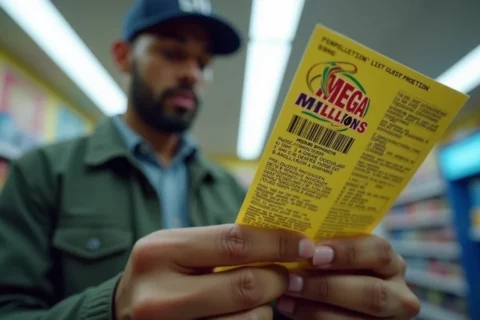
Mega Millions replicated this same pattern between March and July 2026, feeding secondary winners through its own extended streak before Florida produced an $803 million jackpot winner. The two games operate as parallel engines, demonstrating that prolonged rollovers function as mass distribution mechanisms for mid-tier wealth.
How Rollovers Manufacture Cultural Events
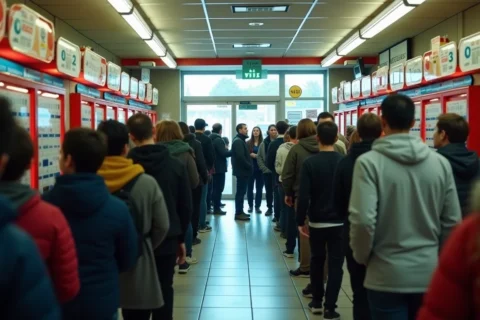
The transformation from lottery drawing to shared spectacle follows a predictable arc that nonetheless feels spontaneous each time. Media coverage intensifies because audience metrics demand it. Social media fills with hypothetical spending plans, half-joking workplace pool agreements, and the particular anxiety of regular non-players who suddenly fear being the only person in their circle without a stake.
This communal participation serves the games’ commercial interests more efficiently than any advertising budget could. The Florida $803 million Mega Millions jackpot in July 2026 was the culmination of months of accumulated attention, each drawing adding new participants to the pool. People who had never purchased a Mega Millions ticket in March were buying two or three by June, not because their financial calculus had changed but because the growing pot had become impossible to ignore socially.
Workplace lottery pools become ubiquitous during these stretches. The logic is defensive as much as aspirational: better to split a billion dollars with colleagues than to watch colleagues split it without you. This social contagion expands the player base far beyond habitual gamblers, pulling in demographics that otherwise avoid lottery retailers entirely.
The Psychology of Small Wins
The lottery’s critics often frame non-jackpot prizes as consolation prizes, sops that keep players feeding money into a system designed to extract it. This framing misses how rollovers actually function. A $50,000 win is not a consolation. For most recipients, it is the largest single financial event of their year, possibly their decade. The 114 Powerball players who hit that tier in October 2023 did not experience themselves as having nearly won the jackpot. They experienced themselves as having won fifty thousand dollars.
This distinction affects player engagement over time. Someone who wins $4 on a Powerball ticket has received exactly the expected value of their participation, minus the house edge, presented as a positive event rather than a slow bleed. Someone who wins $50,000 receives a story they will tell for years, a down payment, a debt clearance, a foundation for something. These outcomes accumulate across millions of players during extended rollovers, creating a broad base of positive association with the game that no jackpot alone could generate.
The lower tiers perform their own function. Matching just the Powerball returns $4. The odds are generous enough that this happens constantly. During 47 consecutive drawings without a jackpot winner, the cumulative volume of these smallest payouts reaches into the millions. Each represents a moment of mild pleasure, a validation of the purchase decision, and a reason to play again.
The Marketing Engine Nobody Acknowledges
Lottery commissions understand this dynamic precisely, even if they rarely emphasize it in public messaging. The jackpot is the hook, the universal shorthand that converts attention into ticket sales. The rollover itself, the extended streak of unclaimed top prizes, creates the conditions for mass secondary winning. No single drawing in the $1.817 billion Powerball run produced the marketing value that the sequence of drawings produced collectively.
Record rollovers are not merely tolerated but structurally encouraged by game design. The odds of hitting the Powerball jackpot, approximately 1 in 292 million, ensure that streaks will occur with statistical regularity. The publicity value of those streaks far exceeds the cost of the accumulated secondary prizes paid out along the way. The eight $1 million winners from the final drawing, the 114 at $50,000, the thousands at lower tiers across all 47 drawings: these are operating expenses for a marketing campaign that generates hundreds of millions in additional ticket sales.
The Mega Millions pattern between March and July 2026 confirmed that this is not a Powerball-specific phenomenon but a feature of how modern multi-state lotteries are architected. The $803 million Florida jackpot arrived after months of escalating participation, each drawing adding new players to the pool and new secondary winners to the rolls.
What Players Actually Buy
The fundamental transaction in a rollover period is not quite what it appears. The stated product is a chance at the jackpot. The delivered product, for the overwhelming majority of participants, is participation itself: the hours of hypothetical planning, the social connection of pooled tickets, the small dopamine hit of checking numbers, and occasionally, the genuine financial upside of a secondary prize.
During the longest rollovers, this secondary product becomes more densely distributed. More tickets mean more winners at every tier. The $1.817 billion Powerball run produced its record jackpot winner eventually, but it also produced thousands of substantial secondary winners and millions of smaller ones. The Florida Mega Millions jackpot of July 2026 did the same across its own extended buildup.
The next time a jackpot streak captures public attention, the numbers to watch are not just the ones in the headline. They are the figures attached to prize tiers that never make the evening news: the match-five winners, the match-four-plus-multiplier winners, the cumulative millions who walk away with something concrete while the top prize continues its climb. The jackpot is the story; the millions of smaller wins are the business.