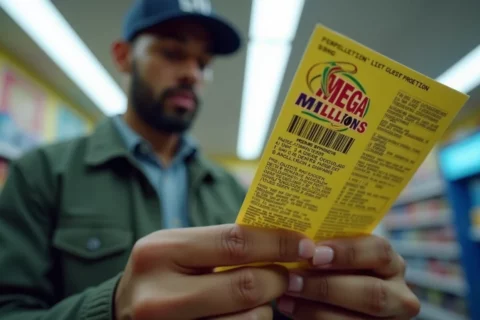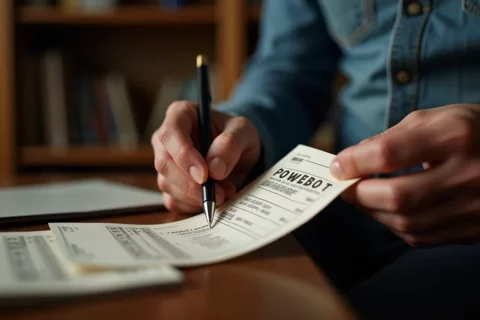
The jackpot has crossed the Atlantic, but the rest of the game has not.
From July 2026, the UK National Lottery became part of Powerball’s main jackpot pool, the first non-US lottery ever to do it. London and Texas are in the same race for the top prize, but they are not in the same game. The headline number is shared, but the ticket, the lower prizes, the claim path, and the tax bill are still built very differently.
The shared jackpot is only the top layer
Powerball now works like a split-screen product. There is one draw, one jackpot pool, and one set of odds for the big prize. After that, the similarities start to fray.
A UK player buys in through the National Lottery website, the app, or roughly 44,000 retail outlets. A US player usually buys at one of more than 200,000 licensed retailers across 45 states, Washington DC, Puerto Rico, and the US Virgin Islands, with online sales depending on state rules. The American ticket remains a $2 purchase, with Power Play available for another $1. In Britain, the National Lottery has set the ticket at £2.50, and there is no Power Play equivalent.
At a glance
- US base ticket: $2
- UK base ticket: £2.50
- US add-on: Power Play, $1
- UK add-on: none
- Jackpot odds: the same draw, the same chance at the top prize
The two markets now point at the same ceiling, but they do not climb there by the same route.
The lower prizes tell the truth
Below the jackpot, the American version of Powerball still runs on its long-standing nine-tier structure. Match five white balls without the Powerball and the standard prize is $1 million. Match four white balls plus the Powerball and it is $50,000. Match only the Powerball and you get $4. If a player buys Power Play, those non-jackpot prizes can be multiplied by 2x, 3x, 4x, 5x, or 10x, although the 10x boost only appears when the jackpot is below $150 million. A $1 million prize can jump to $2 million on the right draw.
The UK side is being built separately. Its lower-tier prizes come from a dedicated UK fund fed by UK ticket sales, and the payouts are fixed in sterling. A matching line that might be $1 million in the US could be £100,000 in the UK structure. Four white balls plus the Powerball might land at £5,000. Just the Powerball could be worth £5. There is no multiplier, no imported prize ladder, and no attempt to mimic the American version one rung at a time.
This difference changes the feel of a near miss. In the US, the consolation prize can be turbocharged. In the UK, the game is cleaner and more stripped back. Same draw, different emotional math.
Currency turns a giant win into a moving target
The jackpot itself is still announced in US dollars, even for a UK winner. The final sterling amount depends on the exchange rate when the prize is paid out. British winners are exposed to a currency swing that American winners never have to think about.
A $1 billion jackpot converts to about £800 million at an exchange rate of $1.25 to £1. If sterling strengthens to $1.30, the same pot falls to roughly £769 million. If it weakens to $1.20, the prize rises to around £833 million. These are not rounding errors; they are mansion money, philanthropy money, generational money.
The lower UK prizes do not move around like that because they are paid in pounds from the local prize fund. The jackpot is the only piece being translated. Everything under it stays native to the market where the ticket was bought.
Claiming the money is still a local experience
The UK also brings a very different relationship with publicity. Winners can stay anonymous if they want to. They can go public or keep the win private, with support from the National Lottery’s winners team. Large prizes are normally handled through direct contact with the operator, and a dedicated Winners’ Adviser helps guide the verification process and offers financial and legal support.
The deadline is simple: 180 days from the draw.
The US picture is messier. Claim windows vary by state, usually somewhere between 180 days and a year. Texas gives winners 180 days. California allows a full year. Large prizes are often claimed at state lottery headquarters or district offices, and an in-person visit is common. Public disclosure depends on the state. Texas, Kansas, and Maryland allow anonymity in some form. California, New York, and Florida do not, and winners there can expect their name, city, and prize amount to become public record.
Taxes decide how big the win really feels
The split becomes brutal here.
UK National Lottery prizes, including Powerball wins, are tax-free. The amount announced is the amount the winner keeps. In the US, federal income tax usually takes a chunk, state income tax may take another, and local taxes can add more pressure depending on where the ticket was bought and where the winner lives. Whether the prize is taken as an annuity or a lump sum, the net figure shrinks before it reaches the bank.
The same jackpot is now open to two markets. However, a London player and a Texas player are still buying different products, paying different prices, winning different secondary prizes, facing different claim rules, and ending up with different net outcomes. The top-line story is shared, but the fine print is not.