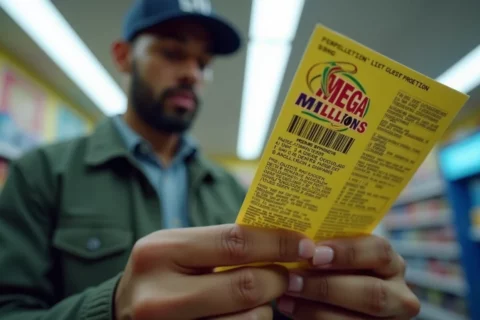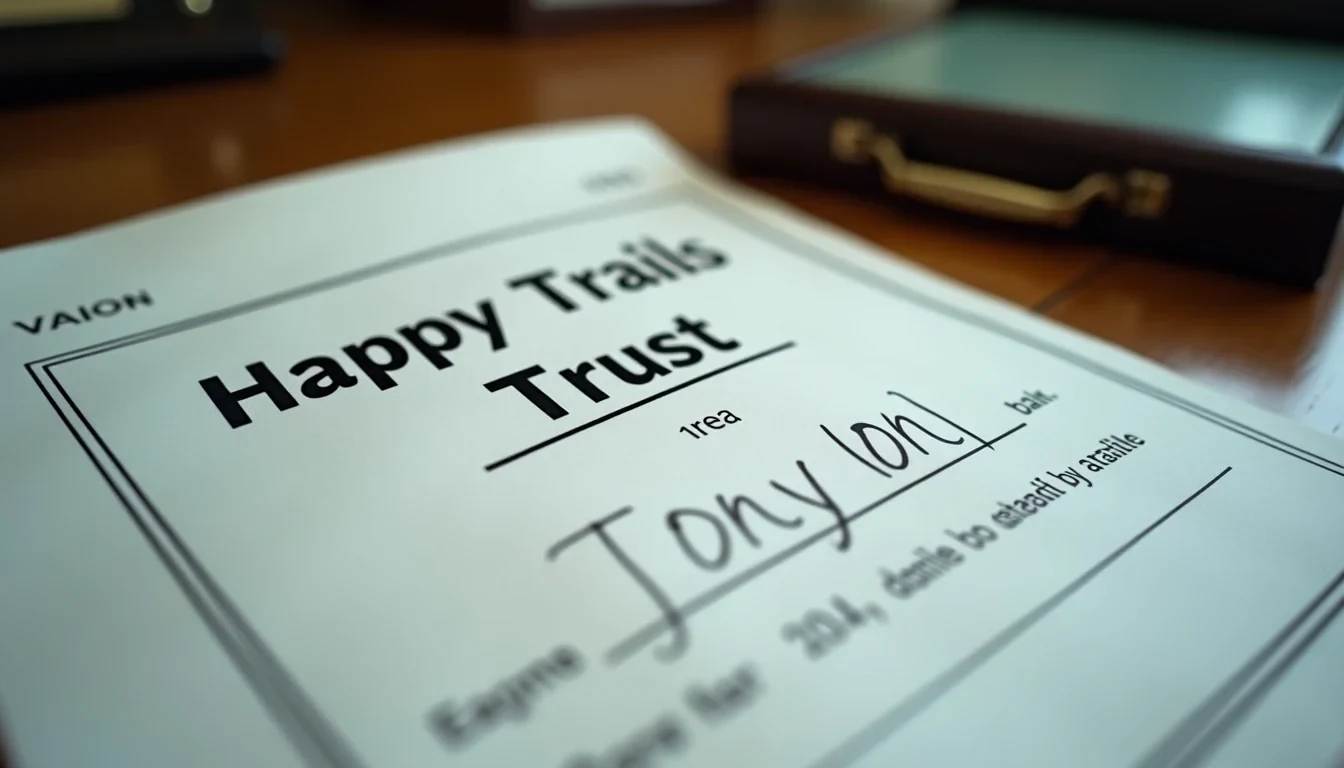
Someone just turned a piece of paper into $27.1 million in cash. All we know about them is that they really liked westerns. The Happy Trails Trust stepped forward in late March to collect a $60 million Mega Millions jackpot drawn on St. Patrick’s Day. The name alone has done more storytelling than any press conference could. It is a trust with a personality, a legal entity that sounds like it should be galloping into a sunset rather than sitting in a bank vault in Van Wert, Ohio.
Lottery anonymity looks like this in practice: not invisibility, but translation. The winner becomes a story we tell ourselves about the name they chose.
How a Trust Becomes Your Public Face
Lottery winners who want breathing room have long turned to legal structures to create distance between themselves and sudden, staggering wealth. A trust functions as a container: the prize money lives inside it, managed according to rules the winner sets in advance, and the individual’s name stays off the public roster.
The mechanics are straightforward. The trust becomes the legal owner of the ticket and the resulting funds. A trustee, often a financial institution or attorney, handles distributions according to the trust’s terms. For group wins, this prevents the usual squabbling about who gets what. For solo winners, it establishes guardrails against the well-documented pattern of jackpot recipients burning through fortunes in months rather than decades.
The Happy Trails Trust distinguishes itself with the deliberate humanity of its naming. Most legal entities sound like they were generated by a corporate filing system: Alpha Holdings, Blue Ridge LLC, something forgettable and sterile. “Happy Trails” broadcasts something specific, a wink at the public that replaces biography with mood. The winner is not hiding; they are reimagining themselves as a concept we can all project onto.
Where State Law Draws the Line
The privacy a trust provides depends entirely on where the ticket was purchased. The patchwork of American lottery law creates genuine arbitrage for the privacy-conscious. Ohio, where this ticket surfaced, permits winners to claim through trusts without forcing individual names into the open. It is a minority of states that include Delaware, Kansas, Maryland, North Dakota, South Carolina, and Texas in allowing this shield.
Other jurisdictions are considerably less accommodating. New York, New Jersey, Florida, and Arizona generally demand that a human name attach to the prize regardless of legal structure. Some states occupy a murky middle ground: the winner’s name might stay hidden while the trustee’s identity becomes public, or the trust name itself becomes the disclosed record. The Happy Trails Trust benefited from Ohio’s relatively permissive framework, but a ticket purchased two states east could have produced a very different outcome.
This geographic lottery behind the lottery rarely gets attention until someone tries to claim. Winners who haven’t done their homework have found themselves legally compelled to step into the spotlight they thought they’d avoided.
The Tax Bill Arrives Either Way
The $27.1 million cash option claimed by the Happy Trails Trust came with an explicit label: before taxes. Nothing about trust structure alters the fundamental obligation. Federal income tax applies to lottery winnings at rates up to 37 percent for top brackets, with a mandatory 24 percent withholding that often leaves winners owing more at filing time. State obligations layer on top, and Ohio does impose state income tax on prizes.
Most lottery trusts are structured as grantor trusts, meaning the income flows through to the individual for tax purposes rather than creating a separate taxable entity. The trust excels at managing future obligations, estate distributions, and generational transfers. It does not, however, perform magic on the initial tax hit. The $27.1 million becomes substantially smaller once the various governments take their cuts. The trust’s value lies in what happens to the remainder, not in preventing the reduction.
What the Name Reveals About What We Want
The public response to the Happy Trails Trust illuminates something persistent about lottery culture. We do not actually require a face or a name to sustain our fascination. The trust name becomes a Rorschach test: some hear optimism and peaceful retirement, others detect irony or deliberate obscurity, still others construct elaborate narratives about western film enthusiasts or RV enthusiasts finally hitting the road.
This symbolic identity satisfies the same narrative hunger that drives lottery coverage generally. The jackpot is never just money; it is the possibility of transformation, the what-if scenario that keeps people buying tickets during rollovers. When the winner withholds personal details, we simply redirect our imaginative energy onto the one clue available.
The trust functions as more than legal protection. It becomes performance, a curated public presentation that manages attention without surrendering privacy. The winner gets to be a concept rather than a person, and the public gets just enough material to keep the story alive in group chats and comment sections.
The Limits of Legal Disguise
For all its utility, the trust approach has genuine constraints. It cannot eliminate taxes. It cannot guarantee complete anonymity in every jurisdiction. It cannot prevent the trust name itself from becoming a minor cultural artifact, subject to the same speculation and occasional mockery that attaches to any public figure who withholds themselves.
What it can do, and what the Happy Trails Trust demonstrates, is create manageable distance. The winner in Van Wert will field requests and attention directed at an entity rather than a person. Their phone won’t ring with the same frequency. Their front door won’t attract the same visitors. The trust absorbs the public dimension of winning so the individual can attempt something resembling normal life, albeit one funded by eight figures of investable assets.
The name they chose suggests they understood this bargain precisely. Not disappearance, but translation into something the rest of us can look at without quite seeing.